CLASSIFIED CONTENT
What's actually going on here?
The funniest part about this viral trend? It requires zero specialized software, zero AR filters, and zero budget.
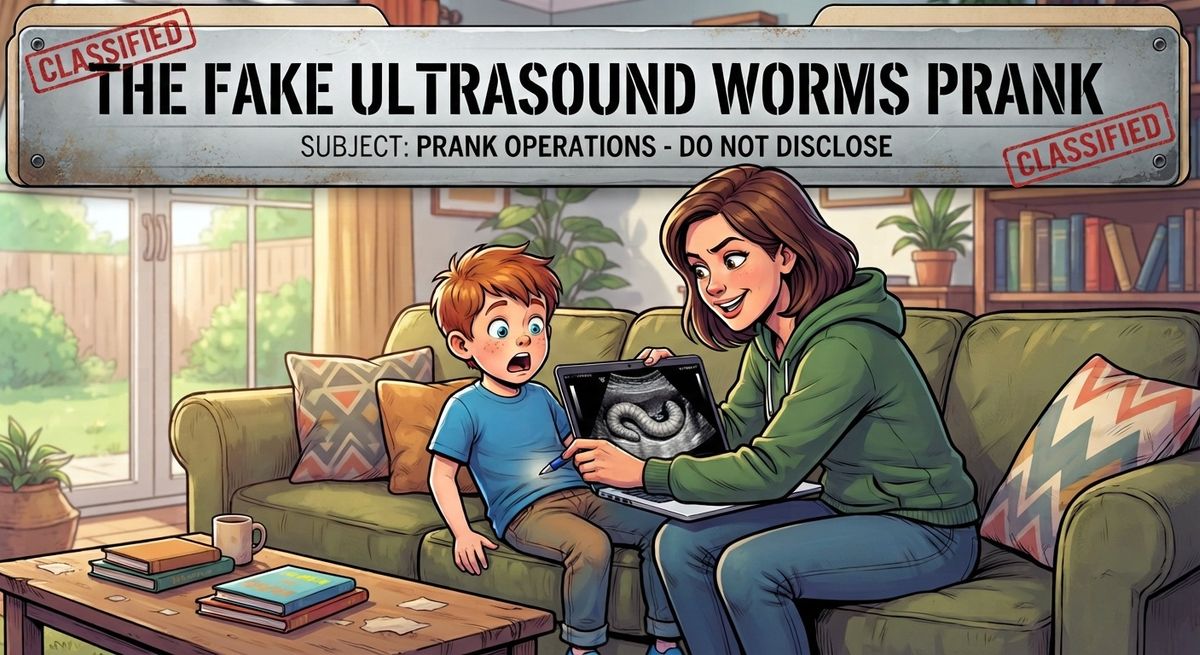
Instead of downloading expensive scanner apps, parents are simply opening a fake ultrasound picture of a caterpillar or worm on their MacBook, iPad, or TV screen.
Here is how the setup goes down:
- A parent lays their kid down on the couch for a "routine checkup" after eating too many sweets.
- They take a regular pen or marker, hold it against the kid's tummy, and pretend to scan their insides.
- They casually swing the laptop screen around to show a dark ultrasound image featuring a huge, realistic caterpillar.
To a young kid who doesn't understand medical equipment or stock images, seeing that screen while feeling something pressed against their stomach instantly breaks their brain.
Why this ultra-simple setup goes viral so fast
Most classic Halloween or parenting pranks rely on sudden physical jump-scares—like dropping a fake spider or jumping out from behind a door. The fake ultrasound prank works completely differently.
- It targets imagination over reflexes: Kids don't just get startled for half a second; they genuinely connect the picture on the laptop screen to what's happening inside their body.
- It costs literally nothing: Anyone with a phone or a laptop can pull this off in under two minutes without buying prop gear or downloading sketchy apps.
- The emotional turn is instant gold for algorithms: Short-form video algorithms thrive on rapid, raw emotional shifts. Watching a child go from casually eating snacks to wide-eyed, jaw-dropped panic within three seconds gets massive watch-time and endless shares in family group chats.
The fine line between hilarious and too far
Naturally, the comment section on these videos is an absolute warzone.
One side calls it peak tactical parenting—a clever, low-tech way to get kids to stop sneaking candies without throwing a tantrum. The other side argues that convincing a toddler they have a giant bug living inside them causes genuine health anxiety or makes them terrified of real doctor visits.
If you're planning to test this out for a quick video clip, the Golden Rule is simple: don't drag out the reveal.
Capture the wide-eyed reaction, instantly turn the screen around to show them it's just a funny picture from Google, and give them a big hug. The best viral clips are always the ones where the victim ends up laughing right along with you once the camera stops rolling.