CLASSIFIED CONTENT
What used to be a simple, boring foam ball you got for free at a corporate trade show has officially mutated into a multi-billion-dollar global obsession.
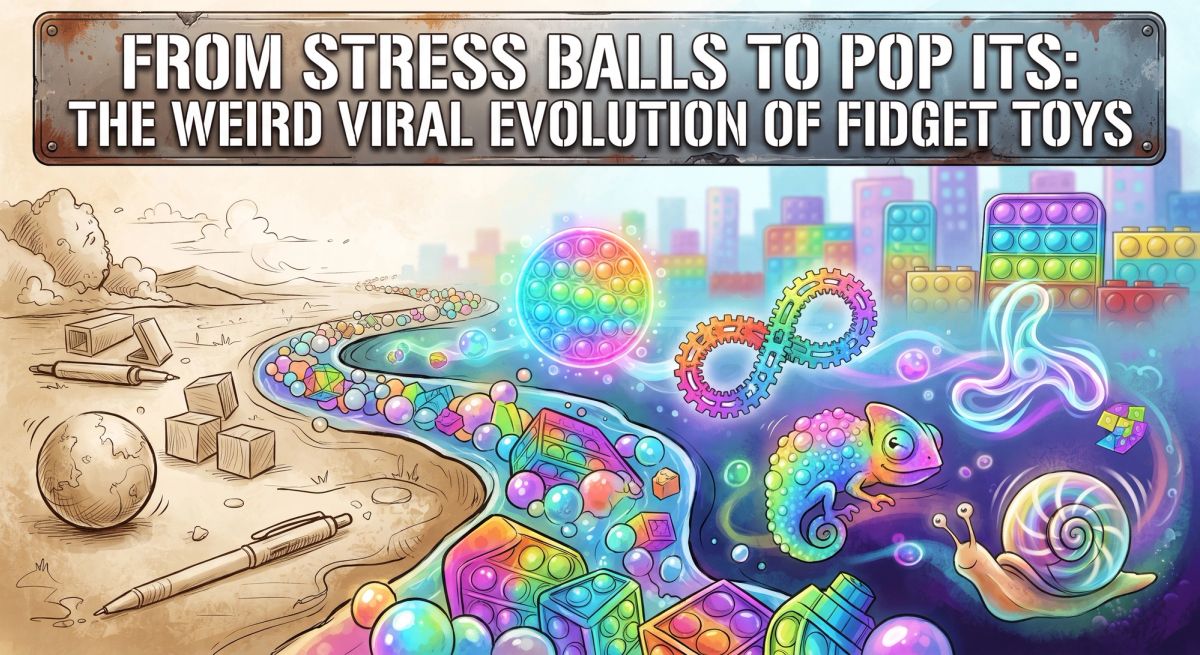
Fidget toys didn't just get more popular—they got weirder, smarter, and unexpectedly addictive. Here is how simple stress-relief tools turned into the internet's favorite viral trend.
The Boring Era: The Classic Office Stress Ball
Back in the 1990s and early 2000s, "stress relief" meant one thing: squeezing a dense, bright blue dense foam ball sitting next to a bulky desktop monitor.
They were plain, stiff, and usually printed with a random corporate bank logo. Their primary purpose wasn't entertainment—it was purely function. If you were stuck on a long phone call with customer support, you squeezed the foam ball until your hand cramped.
It worked, but nobody was filming videos about them or trading them on the playground.
The 2017 Explosion: Fidget Spinners and Tactile Satisfaction
Everything changed around 2017 when the Fidget Spinner exploded out of nowhere.
Suddenly, stress tools shifted from "functional office gear" to "tactile toys you couldn't put down." The magic wasn't just in the movement—it was the sensation of smooth bearings spinning at top speed and the satisfaction of mastering one-handed balance tricks.
Right behind spinners came the Fidget Cube, bringing tactile buttons, switches, and gears specifically engineered for hands that couldn't sit still during meetings or study sessions.
This era proved a huge psychological point: people don't just want to relieve stress; they crave satisfying, tactile feedback.
The TikTok Era: Pop Its and ASMR Sensation
When short-form video took over social media, fidget toys evolved again—this time prioritizing sound and visual satisfaction.
Enter the Pop It. Inspired by bubble wrap, these silicone grids allowed endless popping without the mess. But what really launched Pop Its into hyper-virality wasn't just the toy itself—it was ASMR content.
Creators filmed close-up videos of crisp popping sounds, color-sorting challenges, and live playground trading sessions. Millions of viewers watched these clips not to buy a toy, but simply because watching someone pop silicone bubbles was strangely calming after a long day.
Modern Chaos: Gravity Knives, Squishy Horrors, and Brain Rot Toys
Fast-forward to today, and fidget toys have taken a delightfully weird turn.
The newest generation of stress relievers combines tactile satisfaction with meme culture and subtle prank energy:
- 3D-Printed Gravity Knives & Combos: Flickable, clicky plastic toys that mimic the snappy action of switchblades without any sharp edges. The crisp clack-clack sound has made them an instant fidget favorite.
- Hyper-Realistic Squishy Props: From ultra-detailed squishy bananas to stretchy, slow-rebounding grotesque figures that you can slam against a desk until they flatten into a pancake and slowly bounce back.
- Haptic Coin Sliders: High-end metallic sliders that deliver a heavy, satisfying mechanical click, bridging the gap between adult EDC (Everyday Carry) gear and casual desk toys.
Why We Can't Stop Fidgeting
At the end of the day, the obsession with fidget toys comes down to how our brains handle constant digital stimulation.
Between endless notifications, long screen hours, and fast-paced feeds, having something physical to click, pop, or squeeze gives your mind a low-stakes grounding mechanism. They're cheap, endlessly satisfying, and prove that no matter how advanced tech gets, humans will always love popping bubble wrap.